Glaucoma Surgery Co-Management
When is surgery used for glaucoma treatment?
In general, surgery isn’t the first line of treatment for glaucoma. But if other treatments fail, glaucoma surgery may be able to save your vision. Most people first go through a glaucoma screening and glaucoma eye exam to diagnose and monitor the condition before surgery is considered.
BOOK AN APPOINTMENT
Home » Eye Care Services » Eye Disease Diagnosis and Management » Glaucoma Surgery Co-Management

The goal of glaucoma treatment is to lower your intraocular pressure by helping fluid to drain. When the pressure is elevated, it can push on your optic nerve – leading to vision damage. If you’ve been told you may have glaucoma, your eye doctor will first perform a series of tests for glaucoma to confirm a diagnosis and understand how advanced it is.
A variety of medicated eye drops can be prescribed to reduce the pressure levels, but they aren’t effective for everyone, especially when pressure levels are very high and need to be lowered quickly or sometimes medicine causes serious side effects, such as hypertension, which makes it a poor option for glaucoma treatment.
In certain cases, your Eye & Ear of the Palm Beaches eye doctor may recommend glaucoma surgery.
How Glaucoma Is Diagnosed Before Surgery Is Considered
Before surgery is ever discussed, a thorough glaucoma exam is needed to confirm the diagnosis and measure eye pressure, optic nerve health, and visual function.
A glaucoma test may include pressure measurements, imaging of the optic nerve, and visual field testing to detect early vision changes.

Types of Glaucoma Surgery
Typically, your eye doctor will perform laser surgery first. These procedures are done on an outpatient basis.
Types of Glaucoma Surgery:
Argon laser trabeculoplasty (ALT)
This procedure opens blockages in your eye, allowing fluid to drain properly.
Selective laser trabeculoplasty (SLT)
When ALT isn’t fully effective, this procedure may be used. SLT works by aiming a precisely targeted low-level laser at only the spots with elevated pressure.
Laser peripheral iridotomy (LPI)
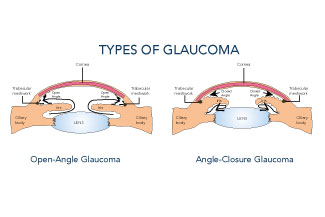
When the gap between your iris and cornea is smaller than normal, narrow-angle glaucoma may develop. With this kind of glaucoma, fluid and pressure build up in this small area of the eye. Using a laser beam, LPI creates a tiny hole in the iris through which the excess fluid can drain.
When all other laser treatments do not relieve the fluid buildup and lower pressure, cyclophotocoagulation may be used. This operation aims a laser beam through the sclera and into the ciliary body, which is the part of the eye that produces intraocular fluid. The laser damages the ciliary body so it makes less eye fluid. Cyclophotocoagulation may be repeated over time to keep pressure levels normal.
Conventional non-laser glaucoma surgery:
If laser surgery doesn’t alleviate eye pressure, you may need a different type of procedure.
A small incision will be made in the white part of your eye to remove some of the inner mesh of tissue, helping the excess fluid to drain. Medication to prevent scar tissue may also be administered. Research shows that this procedure lowers eye pressure in 6-8 out of 10 people and may be most effective in people who haven’t had previous eye trauma or surgery (for glaucoma, retina surgery, cataracts, or eye muscle problems).
A tiny tube will be inserted inside your eye to facilitate fluid draining. Many minimally invasive implants are now available.
A heat device, called a Trabectome, is used to make a small incision in the drainage tubes of your eye, which sends heat to the inner mesh of tissue and relieves fluid pressure. Electrocautery is less invasive than trabeculectomy or drainage implants.


Risks of Glaucoma Surgery
The primary risk of glaucoma surgery is that it increases your chances of developing cataracts later on. Other possible risks include:
- Red eyes
- Eye pain
- Abnormal eye pressure – too high, or even too low
- Vision loss
- Eye infection
- Inflammation or bleeding in your eye

Benefits of Glaucoma Surgery
When other types of glaucoma treatment are ineffective or unsuitable, glaucoma surgery offers an excellent alternative to prevent damage to your optic nerve and vision loss.
Also, if the opening in your eye begins to close up again, glaucoma surgery can be repeated. If you’ve already lost vision due to glaucoma, surgery will not be able to restore it – but it can prevent further damage and save your remaining sight!
For glaucoma diagnosis and management, be sure to visit our eye doctors for regular comprehensive eye exams.
Schedule an Eye Exam Today
If you’ve recently had a glaucoma screening,
or have been diagnosed with glaucoma,
the next step is understanding your treatment options.
REQUEST AN EYE EXAM
More About Glaucoma Surgery Co-Management



Read Our Latest Posts