A new grade brings plenty of changes. Books get denser, assignments get longer, and screens often play a larger role in the school day. Your child’s eyes continue to grow, too. A pair of glasses that worked well last school year may provide a different experience several months later.
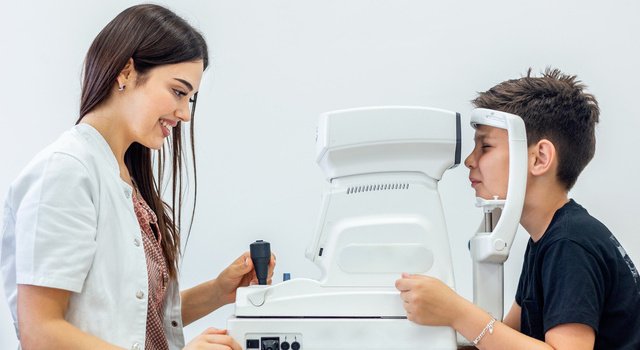
At Eye & Ear of the Palm Beaches, our eye doctors provide comprehensive eye exams for children across Palm Beach County. A back-to-school eye exam gives us a chance to check your child’s eye health, test their prescription, and see how comfortably their eyes handle the visual demands ahead.
Why Children’s Glasses Prescriptions Can Change Quickly
Children’s eyes continue to grow and develop throughout their school years. Their prescription can change along the way, especially when myopia (nearsightedness) progresses. A child who could clearly see the classroom board last year may begin to squint as their vision changes.
Children also adapt to blurred vision in ways that can make vision problems harder for parents to spot. They may sit closer to a screen, bring reading material nearer, or choose a different seat in the classroom. A comprehensive eye exam lets our eye doctor measure their vision directly, assess their visual development, and compare the results with their current prescription eyeglasses.
How Visual Demands Increase in a New Grade
Each new grade can ask more from a child’s eyes. Reading may become more detailed, homework may last longer, and digital assignments can add more near work to an already busy day. Greater visual demands may make an outdated prescription more noticeable during activities such as:
- Reading smaller or denser text for longer periods
- Looking between the classroom board and nearby worksheets
- Completing assignments on laptops or tablets
- Following presentations from across the classroom
- Reading while taking notes
- Moving between books, screens, sports, and other activities
- Spending longer periods focused on close-up work
Prolonged near work and screen use may also contribute to eye strain. If your child talks about tired or uncomfortable eyes after school, share those details with our eye doctor during their exam.
Signs Your Child May Need a New Prescription
Children often communicate vision changes through their behavior before they have the words to describe blurred vision. As the school year approaches, watch for patterns during reading, homework, screen use, and activities that require clear distance vision.
1. Squinting to See Far Away
Squinting can temporarily make distant objects appear clearer for someone with blurry distance vision. You might notice your child squinting at the TV, street signs, or objects across a room. In the classroom, the same vision problem can make writing on the board harder to see. Frequent squinting gives parents a good reason to arrange an eye exam.
2. Moving Closer to See Clearly
A child who starts sitting closer to the television or bringing objects nearer to their face may be compensating for blurry distance vision. Changes from their habits can provide useful clues about their vision. Our eye doctor can check whether their current pair of glasses still provides suitable vision correction.
3. Headaches or Eye Strain After Schoolwork
Headaches and eye strain during visually demanding activities can have several causes. If your child regularly mentions discomfort after reading, homework, or extended near work, share that pattern during their eye exam. Our eye doctor can assess their prescription and how their eyes work during these tasks.
4. Changes in Reading Habits
A child may start taking more breaks from reading, lose their place frequently, or choose activities that require less sustained near vision. Many factors can influence reading habits. An eye exam can help determine whether vision plays a role and whether their prescription glasses need an update.
5. Rubbing Their Eyes Frequently
Frequent eye rubbing during homework, reading, or screen use can accompany tired or uncomfortable eyes. Parents may notice it later in the school day after children have spent hours moving between near and distance tasks. Sharing when these symptoms appear gives our eye doctor useful context.
6. Wearing Last Year’s Glasses Less Often
Pay attention if your child suddenly pushes their glasses up and down, looks over the frames, or leaves them behind more often. Their frames may need an adjustment, or their prescription may have changed. Our eye doctor can check the eyewear fit and prescription to determine what may provide clearer, more comfortable vision.
Why School Vision Screenings May Fall Short
School vision screenings can flag certain vision concerns and identify children who may benefit from further evaluation. A comprehensive eye exam provides a broader assessment of a child’s vision and eye health.
At Eye & Ear of the Palm Beaches, our eye doctors can measure your child’s prescription, evaluate their eye health, and compare their current needs with the prescription eyeglasses they already wear. That fuller picture can be especially useful when a child enters a new grade with greater visual demands.
Give Your Child a Clearer Start in Florida
Good vision can support the everyday tasks children face at school, from seeing the board to reading a chapter or completing an assignment. Eye & Ear of the Palm Beaches provides comprehensive pediatric eye exams for families in Boynton Beach, Palm Springs, and Palm Springs, Florida, with personalized care from an experienced optometric team.
Book your child’s eye exam to check whether their current prescription is ready for the upcoming school year.
New Grade, New Prescription FAQs
How Often Should Children Have an Eye Exam?
Your child’s recommended eye exam schedule depends on their age, eye health, prescription, and individual visual needs. Children who wear glasses may need closer monitoring as their eyes grow. Our eye doctor can recommend an exam schedule based on your child’s results and vision history.
Can a Child’s Prescription Change in a Year?
Yes. A child’s prescription can change as their eyes grow and develop. Myopia, or nearsightedness, can also progress during childhood. An eye exam can show whether last year’s glasses still provide the vision correction your child needs for school and everyday activities.
What Are Signs My Child Needs New Glasses?
Squinting, moving closer to distant objects, headaches, eye strain, frequent eye rubbing, blurred vision, and changes in reading habits can signal that your child’s vision deserves another look. Our eye doctor can check whether a prescription change or another eye health concern may be involved.